Wednesday, September 12, 2012

"Get out of my Room!"

I haven't blogged about the meaning behind Montessori's Planes of Development yet I know I have wibbled about them from a personal perspective, so I thought it was about time to set the record straight and explain, as best I can, what she meant.


Montessori saw the growth of the child to the flourishment of the man, to be split into four main stages: Stage one, for which many of us in the UK have most recognition, is the time she called 'The Absorbent Mind'.
The Absorbent Mind - Stage one
This period of the child, she explained, was a time whereupon the child is like a sponge. The mind absorbs all that is put around them, hence the title (she was a clever woman ;-)! She also frequently referred to this period as the Embryonic period. Yup, just like we call a developing baby in the womb, an embryo, she wisely saw that the child does so much development and learning outside the womb in those first six years, that they still require the title 'Embryonic'.

She further subdivided this stage into two: The Spiritual embryonic period from ages 0 - 3years and the Social embryonic period from ages 3 - 6 years. I will go into these in more depth on another occasion.

From Stage one, the child moved into Stage Two, referred to as "Childhood" (okay, so she wasn't quite so inventive with the title - got a bit Ronseal!).
Childhood - Stage Two
Childhood sees the child develop from 6 - 12. It's the period in the UK whereupon the child is in primary school, or elementary in the US. The child moves from the concrete to the abstract in reasoning and the period is a time of relative calm within the child.

Stage three is Adolescence and once again, she further subdivides.
Adolescence - Stage Three
The first period of adolescence is 12 - 15 years and she calls this Puberty. It is a period of disquiet once again as the child begins to test boundaries and has a plethora of hormones that can create mood swings and lapses of normal concentration. In fact, she likens this period to the toddler years due to the apparent 'tantrums'. This explains why my 12 year old has come home from school on at least two occasions, without his school shoes! 

The second subdivision of this stage is from 15 - 18 years and Montessori called this Adolescence. She noted that the adolescent was impressionable and full of ideas. They may 'attach' to good causes (or what are good causes in their eyes). The drive for independence at this age is as strong as it is at ages 0 - 6.
Most interestingly I discovered, was that she writes that it is an age whereupon children meet most resistance and from that resistance they can gain a flight into fantasy reaction. So it can be a cause of turning to obsessive video game culture or the need to dress like a particular pop star or idol. So where we see children becoming insular or more interested in fantasy than reality and we say 'it's just a teen thing' or 'typical teenagers', maybe it is cause and effect rather than a genetic pre-programming towards video games and unsuitably clothing or behaviours. The environment becomes less prepared for them in a time when it needs to be AS prepared as it was when they were in that first stage.

The more you read about this period, the more fascinating it becomes. The 'Erdkinder' was a product of her desire to provide the correct type of environment for these young people to enable them to feel empowered and unpressurised. The Erdkinder is built on her realisation that a child needs to develop 'life skills' and that these may be best achieved away from the home on a farm or similar. Ironically in the 21st century, this period is when they are are their most vulnerable, feel under most pressure and yet society has chosen this age to be the best age to add to that pressure by creating GCSE and A level exams at the 15 - 18 age!  I am going to write another blog post on the Erdkinder at a later date, but for now, feast your eyes on the Hershey school in Ohio!


Stage Four was Maturity from 18 - 24 years.

So; we are moving from a period of relative calm in our house whereupon we have had, for the first time, all three children in the same plane of development and, from an observation perspective, it has been exactly that, relatively calm. The younger one is now able to be sociable with the older two, the older one is able to play with them, or remove himself if he doesn't wish to join in and the middle one is happy there is a sibling either side and doesn't seem to mind which way he goes!

However, we are closing the door on that chapter and already I am beginning to see elements of change. The oldest is now at secondary school in the UK. He is more tearful than he has been. He is more aware of himself and his place within his peer group. He has mentioned his looks on more than one occasion. One of the things we are beginning to feel we need to find boundaries for is the respect for personal space. They have been fairly easy going and tolerant upto now about visitors to their rooms, however, the eldest is at a point where he wants some downtime away from his siblings and, also doesn't want to return home to find he has been visited by a magpie!

So last night we had a small family conference on the top of the stairs after an altercation resulting from this exact problem. I was racking my brains as to how I could deal with this in a positive light and ensure that they were heard and were able to form their own solution to the problem. 
I gave them floor space each to put forward this point and from this they needed to democratically decide how to approach this and what the boundaries were for going in and out of each others' rooms. 
The result was, for now at least, calm and harmony. Tonight they are going to make each other a door poster that state the 'rules' that need to be observed for privacy. 

Independence = Liberty = Discipline at whatever stage of development. I am gradually learning what my 'job' is as an adult of growing boys/girls, how it is not so very dissimilar to having a 3 year old. I still need to set prepare the environment in order for them to carry out the task and achieve independence, in this instant my role was to prepare the forum for them to discuss and to facilitate their plan. 

Friday, September 7, 2012

Television for girls

The topic I want to talk about today is television. I know it's quite a hot topic of debate amongst Montessorians and I don't want to extend this into that debate today. The crux of this post is about quality movies for children over six, particularly girls.

I have written before about stories and movies for boys that aren't all about guns and fighting and I will post a list of our choices at the end of the blog for you.

However, girls, strangely enough, are an oddity for me and I realised that I had very little knowledge as to 'girls' movies because my daughter has always chosen to watch the same types of things as her brothers.

The debate as to television viewing per se, is something that in Montessori and, moreso in Steiner, circles goes around as a hushed whisper as if ownership of one is akin to owning a cannabis farm in the garage!

Let's be real though: Montessori, obviously, was not of the era of television, I'm sure she never envisaged a world in which moving pictures would be displayed on a box in the front living room when she wrote her books. However, this IS the 21st century and 'most' families (not all) do have a television and 'most' children have probably watched something on one these days.

I am not going to talk about the pros and cons of television viewing, this post is not about that debate. I will talk about that another day. This post is about the 'quality' of viewing.

From a Montessori perspective, children are unable to extrapolate abstract reasoning, therefore, for a young child to be watching hours of princess fairytales is against the grain of her thinking. Which  suggests to me that television before the age of around 3 or 4 is going to be primarily abstract: Teletubbies (do they even exist now?) with overgrown coloured jelly babies and a smiling baby trapped in a sun? Cloud babies? Waybuloo? I'm really not sure that this would be anything other than abstract. I think, true Montessori would be to postpone television at this age and be outside enjoying nature and immersed in reality (I actually think she'd rather see children doing that per se, but we all know that kids like wind down time where they do switch off and they also like to go to the cinema or watch movies with their friends).

However, once that differential has been reached, then what kinds of television watching is there out there that promotes a positive and peaceful image?
I know that my children enjoyed Nina and the Neurons, Storymakers, Ballamory, Big cook, Little cook from CBeebies. We still don't watch CITV for advertising reasons (that'll be another blog post!).

From a movie perspective, I began my parenting by being quite strict with movies. If the movie was first written as a book, I would give my eldest the book to read first. This did work for quite a while due to the fact he was an avid reader at 6, so was able to read Harry Potter and we read the Hobbit with him and Swallows and Amazon, King Arthur and Huck Finn. It meant that when he first saw the movie cover for Harry Potter he was totally disappointed that the images he had in his head of the characters were totally different to the ones portrayed by Alan Rickman and Daniel Radcliffe, so we were able to postpone the viewing of the movie for another couple of years.
However, his brother was not quite the same reader and it was also very difficult to control an eight year old's viewing with his six year old brother around. Hence his brother probably began his Harry Potter enlightenment at a younger age than he.

Their sister, when she began her tv watching was not convinced about Mulan or Pocahontas, she wanted to watch HP as well, so I have never been asked to buy 'Princess' movies or 'Barbie' movies, even the Hannah Montana dvd she was once given for a gift has remained unwatched.
So, to be asked today what movies have a positive image for girls I think my answer would be:

From the age of six onwards:

Harry Potter - Hermione rocks, there are no two ways about that! This movie unequivocally demonstrates you can be clever and cool!!!
However, I would only suggest that the first one were suitable for this age, I would leave number two until the child were a little older. The last ones I feel are quite dark and, I think it depends on the maturity of your girl as to whether you felt she could cope. The thing to remember is that we, as adults, will see things in a whole different way to a child and what we read into something, they will not bat an eyelid at if it is only suggested (acting something out is a whole different thing!)

Despicable Me. Those cute little orphans kick some real butt and it's a great image of being able to change into a nice person, how love wins through in the end and how money isn't the answer to all. Oh and no one dies!

The Lion, Witch and the Wardrobe - again a tale with little Susan being triumphant and strong over her brother, but putting his cruel behaviour toward her out of her mind to save him. It's a tale of trust, love and bravery.

A Series of Unfortunate Events (I'd leave this until around 8 or older as it can be a little dark, but the books are great fun for a confident 7 year old) Violet doesn't let the evil Count win. Another tale of female bravery, sibling unification and some wicked and cunning schemes into the bargain!

Annie - I know, very 70's but my dd absolutely loves Annie. There's nothing better than singing along with her and watching her melt old Daddy Warbuck's heart. Oh and the fact she wins over Rooster adds to the impact!

How to Train Your Dragon was a good one for her. There are some positive female role models in it, but it also has a great underlying theme in believing in who you are and what you can do. She and her brothers also became hooked on the books and her elder brother could speak fluent dragonese from the age of 10 lol!

I guess Monsters Vs Aliens has the female lead and again, there is team spirit and 'not feeling you can't do something because of what you look like' theme (maybe I'm reading a little too deeply into that :-)

For your older child, maybe 8 and up, there is Percy Jackson and the Lightening thief. There is some fighting, but no one dies and it's based on Greek myths which, as my middle child who didn't seem to want to read, read the whole series over and over and won his school's achievement cup for his reading ability and knowledge on The Greeks, I guess isn't a bad thing. There is a female lead in that and she knows how to wield a sword. There is also an underlying theme in this about dyslexia and finding out who you are - maybe this would be overlooked by a child though.

For your much older girl, teenagers, there is Bend it like Beckham. Now, it's been a long time since I watched this, but I seem to recall there was a little bit of swearing, but it is a story of two girls who are football mad and how they overcome their difficulties to follow their dreams. There is cultural and some relationship issues in the film.

Also for teens there is The Sisterhood of the Travelling Pants - which I adore myself as a bit of a feel good chick flick with all the girls coping with a huge variety of every day issue that they manage to get each other through with their deep friendship.

Oh and there's always the Anne of Green Gables series. I have watched the first two movies with my 7 year old (the ones with Meghan Follows in) but the third and fourth that they made just for tv, that is a loose adaptation on LM Montgomery's stories are not suitable. She may enjoy them when she is older, but they are very loose to the books.

Of course, if you can get hold of them, there's always Little House on the Prairie which I remember watching as a girl and wanting to be like Laura. She always knew how to hold her own, had a wonderful loving family and I wanted to be her!


Other television series that my children now enjoy (again from 8 onwards) are Merlin, Dr. Who and we often like to watch things like Frozen Planet, Yellowstone and other documentaries.

I know that this is a very small list and you may have other suggestions. I am particularly keen to hear from those of you that may have suggestions for the 6 - 8 age range for girls. As I said, my dd was never particularly bothered by watching things that were different to her brothers, so I never really did my research into this age group specifically for girls.


Thursday, August 23, 2012

Monkey see, monkey do

Today I witnessed something that has weighed heavily on my heart.

A heavily pregnant mother was in the supermarket with her two children, both under 5 I would guess.

The younger one, was getting tired and wanting to be picked up, however, she had her shopping trolley and the hand of the other one too.
I was not able to help her, only observe from some distance as I was in the queue.
However, I was able to hear the protestations of the younger one which were getting gradually louder.
But, it wasn't this that made me turn my head as the sounds of cries of tired and bored toddlers are common in a large supermarket in the middle of the day.

What did make me turn and look was a sudden 'SHUSH' with a ferocity that made me think 'Wow! he's cross with his child!'
But no! He was not cross with HIS child, he was in the face of the pregnant woman's child!

'I come to do my shopping' he growled for us all to hear, 'not listen to a child crying'.

It is sad that he felt it necessary to criticise a mother who was probably tired herself, rather than offer a hand of friendship or help.

So why am I writing this here?

Because from this incident, this child has learned nothing about the world bar intolerance. When he turns around to his new sibling and yells at it to be quiet, he will be reprimanded, yet he is just mirroring the behaviour he himself experienced.

When we observe the child and the child's behaviour it is important to recall our own behaviours. What we are seeing is learned behaviour and will reflect what the child sees.

The child is born as a blank canvas, it is not born knowing how to 'push buttons' or 'misbehave'. What we may construe as inappropriate behaviour is learned, either by observations of the child's own from his/her care giver, or by the need to find way to receive attention when it needs help or assistance.

When the child cries, it is not to annoy or wind up, it is because it has not yet developed the capacity for speech or explanation. Helping the child to help themselves will lessen the tears, respecting times for sleep and appreciating the need for times to burn off energies will reduce tantrums or melt downs.


"It's amazing how we teach our children what we ourselves need to learn. We yearn for them to understand what we never did, to be the perfect, balanced people we always wanted to be. Yet our feelings are often contradictory. We want them to have it all, but not be greedy. We want them to be giving, but not to give it all away. We want them to have everything they want, but always to share..."

                                                                                                             - Rabbi Irwin Kula

I feel this quotation beautifully explains how, as adults, we can be so hypocritical with our children. We want them to listen to us, but do we really listen to them? We want them to be kind to others, but are we being kind to them when we shout at them because we're tired? We want them to be orderly, but are we being orderly when we leave the washing up or fling our shoes in a corner? When we utter an annoyance with a cursive thrown in, are we really that surprised when the child is heard saying the same word to his toys or friend?

It is hard to parent. It is hard to laugh when you are tired, it is hard to tickle when you want to smack, it is hard to respond calmly when you have responded three times already that night, it is hard to be fully present when you have an agenda to organise for tomorrow's meeting, it is hard to take time to prepare, sit and eat together when you have activities to run children to... but in order to have a tolerant society, we need to start with our children.


Wednesday, August 22, 2012

Folding

Gosh so much has happened again since I last posted, but, this blog is not about my life, but about Montessori, so as I am returning to the classroom via a Montessori diploma and am starting some Montessori inspired parent and infant classes, I'm going to get right back on top of blogging some great Montessori thoughts, tips and ideas for bringing Montessori right into the home.

My children are getting so much older now and the beautiful Montessori quotation

"Help me to do it by myself" 

could be seen to be less appropriate now, but how wrong that would be.

As with all things, we parents are always the directors, the guiders if you like, not the teachers, the children teach themselves and at any age that is true. My role now as they get older is to listen to their choices, suggest my thoughts but to not do it for them or inflict my ideas upon them. Of course, I can reflect on their choices and give them my reflections, but I hope (in the truest Montessori way) that they will be independent enough to come to their own well thought through decisions. That is the goal we are all striving for right...although, on days when they all fight and bicker, I do wonder whether we will get there!


However, today I want to share with you a really simple piece of equipment that can help them to fold things, it can start as simply as with a tea towel, but eventually you can show them how to fold a simple t shirt.

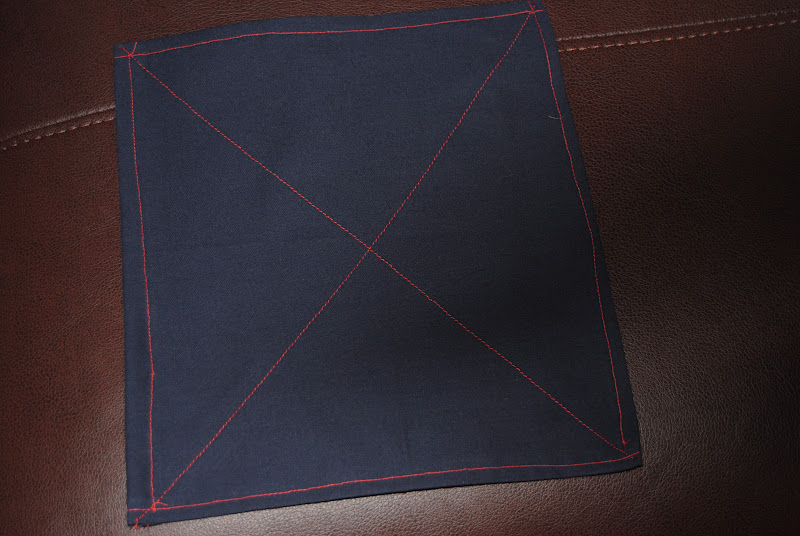
First you need a few squares of plain fabric. It has to be plain as any patterns will detract from the activity.

I hemmed around the edges and then you can make different fold lines on them by sewing in a coloured thread.


Then show the child how to match the edges so that you are folding on the coloured line.


Squares


Triangles


You can then do ones with several folds.

If you have an older child, you might even consider using this activity to introduce them to a cool iron and ironing board. We did this today and at 7, she was more than capable. My feeling is that as long as you can have them (the child) standing with both feet on the floor rather than on a stool, so they can reach the board (mine goes to a really low height) you can show them how to iron.


I just had to show you this as well. This is a child sized cheese or lemon/nutmeg grater. It's amazing what you can find when you look around. Thank you TKMaax!


Over the next few months as I begin to prepare for the Parent and Infant classes and my own Montessori journey I will bring you more reflections and share further ideas.


Monday, November 22, 2010

New Beginnings

It has been a very long time since I last posted anything on this blog. Things have changed in our life but Montessori still prevails.
On a schooling front, all three are back in various schools now for a variety of individual reasons, some of which were mine, many were theirs, however, one reason is that I decided to go back to school myself and this, in itself, is proving an adventure with many paths that are converging.

It's incredibly exciting but over the next year or three I shall be studying to become a midwife and working on a project with a team of Montessorians in Brighton to prepare a Montessori antenatal curriculum. This is to realise a vision that they and I have that Montessori education is less encased in the parameters set out by the word education and more a way of life.

As this blog has already demonstrated, there is so much of Montessori's learnings and observations that need to exist in the home in order for there to be continuity and security in a child's life if that Montessori education is the family choice. However, perhaps there is more still.

Montessori talks in her book "The Absorbent Mind" about the newborn having a mental life that must exist embryonically, therefore, if this is the case, how much do babies remember about their birth or life in the womb and what is the connection between babies who are perhaps upset in this existence womb side and their early life during the extrogestational period. It is easy to observe a baby earthside and take responsibility for their development and stimulation, but how many people, honestly and truly, take as much responsibility as to their birth experience from their baby's perspective? How many women, hand on heart, irrevocably trust their bodies and their babies the first time they have a baby? Well, the statistics are not in favour and I for one, was a number within those stats.

It is not just Montessori who speaks of this; similar writings on this subject can be found in work by Rudolph Steiner and Emi Pikler.  I think we would be arrogant to say that we understand how life really starts and what external sources or choices are made, cosmically even, to define our destinies. If a child initiates birth, perhaps the spirit of the child initiates conception, why did that particular gamete reach that particular egg? All through life we have the opportunity to initiate events that may seem mysterious to us.

We trust our bodies to tell us when we are hungry, when we need to urinate or defecate, when we need to rest or drink water and we trust our hearts to beat every day. Amazingly, we put our trust into the organs that work these systems in our bodies, yet we don't trust our bodies to birth and put all our faith into technology and hospitals (92% of babies are currently born in hospital in the UK). Through doing this, are we setting up the perfect environments for our babies to be born? I could talk about this for hours and for fear of sounding like a homebirth radical with a disregard for hospital as being a safe place for babies to be born (which I am not), or an anti-c-section nutcase (which equally, I am not) I will not digress further.

So, the idea of Montessori style prenatal education is a logical beginning in my opinion. Perhaps the idea of the prepared prenatal period should bear as much relevance as the prepared environment?

So, I hope that this blog will become more active again over the next few months as we start to develop this programme. I hope that we can create and inspiring and helpful programme that will encourage more families to make the same conscious decisions they make postnatally, in the antenatal and maybe even conception period.

So please, bear with me and stick around.

Yours in the Montessori spirit x

Wednesday, May 6, 2009

Baby steps

Where are we now? Week five perhaps? I'm not sure. However, it's beginning to settle. We're finding a natural rhythm to our day and I'm even finding the odd pocket of time to do my own bits.
It's interesting to have the three of them at such different stages of their natural development. Master Beehive the elder is a bookish character, quite self motivated and with a love for maths and reading. He'll happily soak up various worksheets or projects, however, he hates to get anything "wrong" and finds it hard to inspire himself to do stuff outside what he's given to do. Master Beehive the younger, however, prefers to work with manipulatives. He's more tactile and a kinaesthetic learner. He likes to be actively doing things, so the montessori materials are coming in wonderfully here for helping him with his Th, H, T and U addition at the moment and animal classification.


Little Miss Beehive, on the other hand, loves to do the work, but being younger, needs more attention. She really could do with more time on the manipulatives, but needs me sat beside her.

I'm sure that time will help this division of my time.

Last night, much to Mr Beehive's horror, I sat and made a load of bead chains. LMB and I discovered a great Hobbycraft whilst the boys were at Spanish class and we bought several bags of coloured beads and some wire. We need to go back as my bead chains are only up to 8 beads so far, but there are 10 chains of each, so hopefully we'll move on to using these fairly soon. The History timeline.


LMB learning to number values by using the addition strips from WHSmiths!!
Tomorrow we are off to the sea bird centre all being well, which ties in nicely with our animals topic and on Saturday LMB is going to make some gingerbread men. Next week we are hoping to go to the Botanic gardens for a class on "Plants we use" with a some folks from the Home Ed group.


Thursday, April 23, 2009

Hit the ground running!

Well, we're closing our first *official* week of home educating and I have to say, I feel we've really hit the ground running. The myth that home educated children miss out on socialising has been well and truly squashed, albeit, quite where my social life will fit in on this may depend on the appointment of a regular babysitter for an afternoon a week! They are currently (between them) doing swimming lessons, Spanish lessons, music classes, ballet and cub scouts!
There are many approaches to home ed from my understanding, but ours is a more traditional *school* approach and we're aiming to continue using some of the Montessori methods that we've learned in the last five years.
The room has been set up in a pretty prepared way with low shelving and areas for each curriculum subject (or the main ones at least)


The lowest shelving has the more practical life type activities with mathematics on the top shelf of this unit.


There are dvds and cdroms of various things and a box of growing National Geographics and History magazines as we pick them up if they have interesting things in them.


Our rugs for laying out work stations and the magazine rack holds their various workbooks for different things.


The arts and crafts stuff is all in the wicker baskets with language and physical geography on the top shelf - and our massive pine cones from California, that all arrived uninjured!

Obviously if we bought a whole raft of Montessori equipment I'd currently be teaching them out of cardboard boxes on a street corner somewhere, so our materials are a mix of bought ones and home made ones. I invested in sandpaper letters (as I don't have the time or patience to make them), but made a moveable alphabet (well it wasn't what I called it then!) when I was teaching in Newcastle many moons ago, all beautifully laminated etc, so.....that works! Our countries work extends to two decent wooden puzzles and then a great magnetic Tesco kit that has countries, capitals and flags - there isn't quite the control of error, but for Will, he doesn't need that quite so much, so he does it with an atlas instead.


This is normally the table we use to snack at, but today it's become the drying table for the start of our iron age diorama. The children decided they wanted to make an iron age village after our visit to Flag Fen when we were back in East Anglia a few weeks back, so we've begun to make round houses, a river and fort. This week we hope to visit the remains of an iron age fort on the outskirts of Edinburgh.


With Elementary age, they naturally need a table to work at, so this is it. Each child's got their own work journal that we're working through daily at the moment, when they get in the swing of it and get a little older, they'll be able to pace their own days and get through their timetables to suit by the end of a week, hopefully instilling some sense of responsiblity for getting things done.


Books - lots of books - I need more shelves!


So this is LMB doing number bonds to 5 and making patterns - she's been doing this all week and seems to be pretty engrossed.


Master Beehive the younger doing some fraction reinforcement using a great game from the High Street.

The diorama beginnings in close up and appalling photography.
We have lots of plans lined up such as an intergrated project week in October to present to their grandparents, visits to the zoo to research a chosen animal in depth and also a visit to the Royal Botanical gardens to attend a plant classification class. There's also golf and tennis on the horizon, trips to the Edinburgh dungeons, setting up email accounts and working da interweb as well as.....just living!!!