A friend of mine is a speech therapist and whilst out for dinner the other evening we chatted about when a child's speech may give cause for concern.
Montessori wrote about the sensitive periods of which there are five main ones:
A sensitive period for movement
A sensitive period for small objects
A sensitive period for language
A sensitive period for social aspects
A sensitive period for refinement of the senses
They are all linked to what she called 'The Human Tendencies'. These tendencies are innate and drive us to behave in a particular way. The tendencies are linked to survival and therefore include things like order, movement, exactitude, precision, communication, exploration, socialisation and repetition.
For example: The need for survival means that there is a drive to find food, for this there needs to be exploration. With exploration comes the need to repeat and be precise. Making tools to hunt needs precision and exactitude and then sharing what you have learned with others requires communication. The need to reproduce means man needs to socialise and communicate...as you can see, these inner behaviours are all part of our make up.
Of course, I am not insinuating that we're still on the hunt for woolly mammoths with spears, but our inner drive has not changed.
This therefore means that the sensitive periods that Montessori talks about are naturally occurring, innate and every child will go through them as and when they are ready to do so.
If we have faith in the child that they will require the need to be social as this is an innate desire of man, this will allow us to have faith that a child will pass through the sensitive period for language because they will need language to enable communication, to enable socialisation.
Of course, it is possible for children to pass through these sensitive periods void of stimulus, this will not enable them to repeat or refine their skills. If they are not talked to, then their is less chance that they will be confident and fluent talkers. Looking at other people who wrote about Language development one will soon discover that language development comes from a range of stimuli. Chomsky would say that all children are born with what he called a Language Acquisition Device; in other words, regardless of anything, a child has an innate ability to develop language. However, Bruner and Piaget argued that children needed stimulus and that had to come from the adults around them. I think over the years this has become undisputed. We have seen horrific things on the television in the past about Romanian orphans who have just been left in cots for hours on end without stimulus. The results to my uneducated eye, are conclusively detrimental. Behaviour is irrational and disturbed and language almost non existent, at least in so far as the use of clear words.
So, providing stimulus, talking to the child, giving them the opportunity to listen to stories or rhymes, sing songs or play games that involve language will enable the child to move through the sensitive period for language normally and, just as all children don't walk at the same age because they don't all go through the sensitive period for movement simultaneously, they won't all talk at the same age. Stimulate and trust your child and they will likely develop language when they are ready, however, if you are at all worried, chat with your child's nursery teacher or with your health visitor.
Monday, November 11, 2013

Education and the teenager
There is a reason to my absence...I've been writing:
I'm in this month's Green Parent Magazine where I'm discussing the benefits of the outside and education for our teens following on Montessori's writings about the Erdkind.
In the UK we seriously lack understanding of how and what our teens need to learn and do during these volatile years. Whilst I am not taking a poke at education or schools, I am saying that there is more to life for our teens than just desks and national curriculum levels and we tend to put a lot of pressure on them at the wrong time. I hope to suggest ways that we can help our teens become rounded and emotionally capable adults and not feel that exams are the be all and end all.
You'll need to cough up the dosh to read the article, which is available in WHSmiths, Boots and some supermarkets as well as healthstores around the country. It's my second article on Montessori education for The Green Parent mag and I have further ones up my sleeve for the future.

I'm in this month's Green Parent Magazine where I'm discussing the benefits of the outside and education for our teens following on Montessori's writings about the Erdkind.
In the UK we seriously lack understanding of how and what our teens need to learn and do during these volatile years. Whilst I am not taking a poke at education or schools, I am saying that there is more to life for our teens than just desks and national curriculum levels and we tend to put a lot of pressure on them at the wrong time. I hope to suggest ways that we can help our teens become rounded and emotionally capable adults and not feel that exams are the be all and end all.
You'll need to cough up the dosh to read the article, which is available in WHSmiths, Boots and some supermarkets as well as healthstores around the country. It's my second article on Montessori education for The Green Parent mag and I have further ones up my sleeve for the future.
Sunday, April 28, 2013
Spontaneous education
Friday lunchtime we had a little girl very upset in the nursery. She was staying for the afternoon session, but she wanted her mum.
Thinking fast on the spot, I asked her if she would like to draw a picture for her mum. She said she did.
We go for a walk on a Friday afternoon and so I then proceeded to find an envelope and explained to her that after she had drawn the picture, we could put it in an envelope, address it and on our walk we would go to the post office to buy a stamp. She decided that she really wanted to do that.
So she drew a lovely picture for her mum and I showed her how to fold it and put it in the envelope.
We took some money on our walk, stopped at the post office where one of the children asked for a stamp. The little girl whose picture it was, posted it in the post box.
To me, this is the exact intention of Montessori education. Real life education.
I'm sure that there are a whole heap of boxes that can be ticked for the EYFS from this activity too, but the main objective of this entire lesson was to cheer up this little girl and this was successful. Further to this, she learned to fold, put a letter in an envelope, she learned that she needed an address and a stamp before posting it in the box. In a few days her mummy will receive her picture through the post so she will begin to understand the cycle.
Friday, October 19, 2012
The coat flip
Oh, ho ho, to be back on UK shores and studying Montessori under a different organisation than AMI...
So, the coat flip.


 For many years, I have taught both my children and friends' children as toddlers to put their coat on using the coat flip:
It was the way I was shown by an AMI trained teacher and it made my children incredibly independent from around the age of 18 months and just look at the face "Look I did it by myself!"
However, within the organisation I am studying they do not believe in the coat flip.
It is not the way that an adult puts on a coat, therefore, as with all Montessori things, we should be demonstrating it in a 'real' sense. They suggest using pairs of children which does beautifully demonstrate grace and courtesy, however, it seriously falls down when you have a single child at home or when you are trying to mould to the "Help me do it by myself" philosophy.
I am not going to argue with the institute. I will, when qualified, help a child to help themselves and use whichever way I feel that particular child may find most beneficial...adding to this, none of my children now do the coat flip but none of them have 'ever' asked me to put their coat on for them!
There is no 'right or wrong' Montessori way, in fact, there seems to be no written word from the great lady herself as to putting a coat on at all. Maybe children in San Lorenzo were too poor to even own a coat, maybe the jacket was worn throughout the day, maybe a small shawl doesn't warrant a coat flip or help from a partner to put on? Either way...you decide
But I just wanted to share with you the 'Jed Bartlett*' way to put on a coat! See...there are 'some' adults who put their coats on this way!
* apologies for the West Wing anoraks out there...Jed, not Jeff!
So, the coat flip.


It was the way I was shown by an AMI trained teacher and it made my children incredibly independent from around the age of 18 months and just look at the face "Look I did it by myself!"
However, within the organisation I am studying they do not believe in the coat flip.
It is not the way that an adult puts on a coat, therefore, as with all Montessori things, we should be demonstrating it in a 'real' sense. They suggest using pairs of children which does beautifully demonstrate grace and courtesy, however, it seriously falls down when you have a single child at home or when you are trying to mould to the "Help me do it by myself" philosophy.
I am not going to argue with the institute. I will, when qualified, help a child to help themselves and use whichever way I feel that particular child may find most beneficial...adding to this, none of my children now do the coat flip but none of them have 'ever' asked me to put their coat on for them!
There is no 'right or wrong' Montessori way, in fact, there seems to be no written word from the great lady herself as to putting a coat on at all. Maybe children in San Lorenzo were too poor to even own a coat, maybe the jacket was worn throughout the day, maybe a small shawl doesn't warrant a coat flip or help from a partner to put on? Either way...you decide
But I just wanted to share with you the 'Jed Bartlett*' way to put on a coat! See...there are 'some' adults who put their coats on this way!
* apologies for the West Wing anoraks out there...Jed, not Jeff!
Friday, September 21, 2012
Montessori furniture
I just have to share some really wonderful links with you today.
These suppliers not only have some great materials you can use in the home or classroom, but many of them are local, sustainable businesses too.

The stool, plank and workbench are calling me at the moment...
 This coat rack is currently on offer at KidsRooms for only £25! They also have table and chair sets for a reasonable price.
Based in the US, but beautifully handcrafted Montessori baby toys!
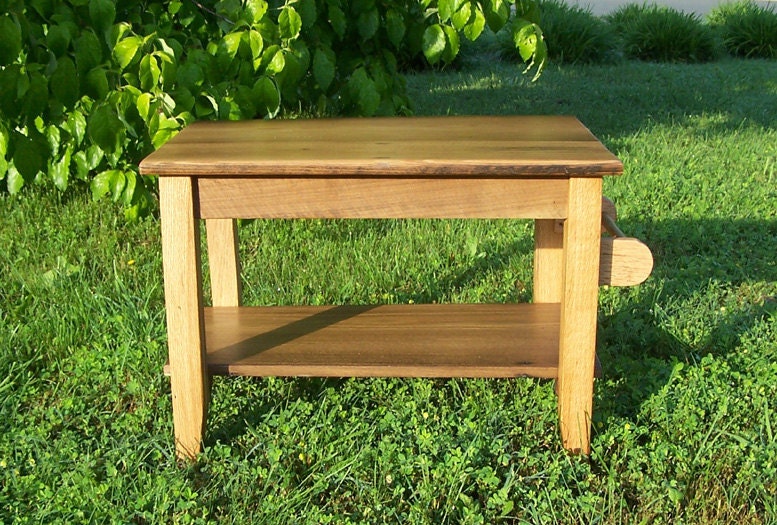
Wow! What do you make of this beautiful handwashing table. Again, sadly in the US. Come on all your British woodcrafters...some of these beautiful tables and useable, small kitchen counters would be fantastic, thank you!
If you know of any beautiful, locally sourced Montessori materials that make the classrooms look so wonderful, please post them, this is the one time only that you can openly advertise yourself if you make proper, traditional Montessori materials IN THE UK. Please don't post your site if you produce PDF documents or sell photocopies of lessons, this is for furniture and equipment.
The third plane
Referring back to my last post about traits of the earlier planes of development recurring once the child moves to a later plane, made me think hard about the behaviours that my eldest (particularly last year) displayed as he moved from 11 - 12years.
Of course, this can't all, by some miracle, be put down to him stepping over that imaginary boundary from childhood into puberty, some of it is also down to a transition from primary school to secondary and with that, a huge amount more homework, responsibility, kit to carry, hours in school etc.
However, the one thing that frustrated me the most until I re read Montessori's philosophy on the four planes of development, was the fact he was so disorganised and forgetful. Particularly when, at two, he would spend hours lining up his cars, at six was methodically working through his work diary to complete the things that needed doing in his school day...
How can you go to school wearing two shoes, and come home with your trainers on but only one shoe in your bag?
How can you forget your homework that you were told to put in your bag straightaway?
How can you forget to take in your swimming kit for the day when you ALWAYS have swimming?
How can you be so tearful about something that seems contrite and in the next minute, you're fine again?
How can you possibly have so many colds?
And how can your eczema be so bad again? It's not been this bad since you were three!
So, I re read what she said about the 12 - 15 age group. How they were prone to mood swings and erratic behaviours, about how they lapsed in concentration and how, she in fact compared this period much like the toddler period of 3 - 6
The toddler becomes engrossed in activities and, if they are not ready to complete the task when asked, there can be quite a tantrum ensuing. They can go to the park with their favourite toy, but easily leave said toy behind on the swing.
Interestingly she states that the period from 12 - 18 is "the period of life in which physical maturity is attained is a delicate and difficult time, because of the rapid development and change which the organism must go through." (From Childhood to Adolescence as cited by Camillo Grazzini in the NAMTA journal Vo.20 no. 1 2004)
She not only means that the child can go through periods of physical illness, but there is likely to spiritual sickness too. It rings true that the teen is more susceptible to glandular fever or meningitis at this time, just like the toddler was at more risk for these illnesses before the age of 5, than any other. Then there being huge hormonal changes that will bring around mental confusion.
So, it is with care and dilligence that my approach toward my newly developing teen is prepared as much as I can, with some reference back to how I would have approached a situation when he was three or four.
If he needed to remember things, I would have continually reminded him, so together we have all made place mats for breakfast time that I've laminated. On these are the lists of all the things they individually need to remember to take with them each day. We are preparing as much as possible the night before. There is still a strong element of structure and order to our home so that they know where things are in order to find them and put them back. They have chores which, I have been giving to them as a lump ie: they need to clean and feed the guinea pigs, dry up, get in the eggs, however, I am realising that it might be easier for them if the jobs were directly allocated so that each child had one area in which to care.
I have also made a concerted effort to give him vitamins each morning to limit the colds and 'maladies' that he gets.
I'm still incredibly fastidious about what goes into his body as I believe that much of their outer personality comes from their inner health (spiritual and physical). He currently keeps a food diary as we are eliminating dairy as a trial period to see whether his eczema improves, it also gives him a good overview as to his mood and sluggishness to see if what he has eaten may have had an effect.
I'm know there is a huge learning curve for all of us, but this is a start.
I know that our schooling system in the UK, does not cater sufficiently for this change in children at secondary school. At a time when they need to grow and sleep, they are on buses at 8am in the morning and working until 8pm at night. At a time when they need to be able to almost go through sensitive periods again, where boys, in particular, need to move to learn; they are put in rows behind desks and taught the same things for the same exams regardless of what they 'want' to learn. I think we have chosen a good school for our eldest. It appears to be nurturing and the pastoral care is outstanding. There are a huge range of activities on offer for them, although emphasis is, naturally, on striving to do the best they can.
There is a good grounding in truth and respect for others. There is a LOT of time spent outside, physical education, gardening and farming (yes, my son's school is getting cows!!! I was thrilled - but sadly they don't offer animal husbandry and horticulture lessons to the parents!) so they are aware of the need to engage in reality. If we can continue to foster his needs at home, he will become a good man.
Of course, this can't all, by some miracle, be put down to him stepping over that imaginary boundary from childhood into puberty, some of it is also down to a transition from primary school to secondary and with that, a huge amount more homework, responsibility, kit to carry, hours in school etc.
However, the one thing that frustrated me the most until I re read Montessori's philosophy on the four planes of development, was the fact he was so disorganised and forgetful. Particularly when, at two, he would spend hours lining up his cars, at six was methodically working through his work diary to complete the things that needed doing in his school day...
How can you go to school wearing two shoes, and come home with your trainers on but only one shoe in your bag?
How can you forget your homework that you were told to put in your bag straightaway?
How can you forget to take in your swimming kit for the day when you ALWAYS have swimming?
How can you be so tearful about something that seems contrite and in the next minute, you're fine again?
How can you possibly have so many colds?
And how can your eczema be so bad again? It's not been this bad since you were three!
So, I re read what she said about the 12 - 15 age group. How they were prone to mood swings and erratic behaviours, about how they lapsed in concentration and how, she in fact compared this period much like the toddler period of 3 - 6
The toddler becomes engrossed in activities and, if they are not ready to complete the task when asked, there can be quite a tantrum ensuing. They can go to the park with their favourite toy, but easily leave said toy behind on the swing.
Interestingly she states that the period from 12 - 18 is "the period of life in which physical maturity is attained is a delicate and difficult time, because of the rapid development and change which the organism must go through." (From Childhood to Adolescence as cited by Camillo Grazzini in the NAMTA journal Vo.20 no. 1 2004)
She not only means that the child can go through periods of physical illness, but there is likely to spiritual sickness too. It rings true that the teen is more susceptible to glandular fever or meningitis at this time, just like the toddler was at more risk for these illnesses before the age of 5, than any other. Then there being huge hormonal changes that will bring around mental confusion.
So, it is with care and dilligence that my approach toward my newly developing teen is prepared as much as I can, with some reference back to how I would have approached a situation when he was three or four.
If he needed to remember things, I would have continually reminded him, so together we have all made place mats for breakfast time that I've laminated. On these are the lists of all the things they individually need to remember to take with them each day. We are preparing as much as possible the night before. There is still a strong element of structure and order to our home so that they know where things are in order to find them and put them back. They have chores which, I have been giving to them as a lump ie: they need to clean and feed the guinea pigs, dry up, get in the eggs, however, I am realising that it might be easier for them if the jobs were directly allocated so that each child had one area in which to care.
I have also made a concerted effort to give him vitamins each morning to limit the colds and 'maladies' that he gets.
I'm still incredibly fastidious about what goes into his body as I believe that much of their outer personality comes from their inner health (spiritual and physical). He currently keeps a food diary as we are eliminating dairy as a trial period to see whether his eczema improves, it also gives him a good overview as to his mood and sluggishness to see if what he has eaten may have had an effect.
I'm know there is a huge learning curve for all of us, but this is a start.
I know that our schooling system in the UK, does not cater sufficiently for this change in children at secondary school. At a time when they need to grow and sleep, they are on buses at 8am in the morning and working until 8pm at night. At a time when they need to be able to almost go through sensitive periods again, where boys, in particular, need to move to learn; they are put in rows behind desks and taught the same things for the same exams regardless of what they 'want' to learn. I think we have chosen a good school for our eldest. It appears to be nurturing and the pastoral care is outstanding. There are a huge range of activities on offer for them, although emphasis is, naturally, on striving to do the best they can.
There is a good grounding in truth and respect for others. There is a LOT of time spent outside, physical education, gardening and farming (yes, my son's school is getting cows!!! I was thrilled - but sadly they don't offer animal husbandry and horticulture lessons to the parents!) so they are aware of the need to engage in reality. If we can continue to foster his needs at home, he will become a good man.
Wednesday, September 12, 2012
"Get out of my Room!"
I haven't blogged about the meaning behind Montessori's Planes of Development yet I know I have wibbled about them from a personal perspective, so I thought it was about time to set the record straight and explain, as best I can, what she meant.


Montessori saw the growth of the child to the flourishment of the man, to be split into four main stages: Stage one, for which many of us in the UK have most recognition, is the time she called 'The Absorbent Mind'.
The Absorbent Mind - Stage one
This period of the child, she explained, was a time whereupon the child is like a sponge. The mind absorbs all that is put around them, hence the title (she was a clever woman ;-)! She also frequently referred to this period as the Embryonic period. Yup, just like we call a developing baby in the womb, an embryo, she wisely saw that the child does so much development and learning outside the womb in those first six years, that they still require the title 'Embryonic'.
She further subdivided this stage into two: The Spiritual embryonic period from ages 0 - 3years and the Social embryonic period from ages 3 - 6 years. I will go into these in more depth on another occasion.
From Stage one, the child moved into Stage Two, referred to as "Childhood" (okay, so she wasn't quite so inventive with the title - got a bit Ronseal!).
Childhood - Stage Two
Childhood sees the child develop from 6 - 12. It's the period in the UK whereupon the child is in primary school, or elementary in the US. The child moves from the concrete to the abstract in reasoning and the period is a time of relative calm within the child.
Stage three is Adolescence and once again, she further subdivides.
Adolescence - Stage Three
The first period of adolescence is 12 - 15 years and she calls this Puberty. It is a period of disquiet once again as the child begins to test boundaries and has a plethora of hormones that can create mood swings and lapses of normal concentration. In fact, she likens this period to the toddler years due to the apparent 'tantrums'. This explains why my 12 year old has come home from school on at least two occasions, without his school shoes!
The second subdivision of this stage is from 15 - 18 years and Montessori called this Adolescence. She noted that the adolescent was impressionable and full of ideas. They may 'attach' to good causes (or what are good causes in their eyes). The drive for independence at this age is as strong as it is at ages 0 - 6.
Most interestingly I discovered, was that she writes that it is an age whereupon children meet most resistance and from that resistance they can gain a flight into fantasy reaction. So it can be a cause of turning to obsessive video game culture or the need to dress like a particular pop star or idol. So where we see children becoming insular or more interested in fantasy than reality and we say 'it's just a teen thing' or 'typical teenagers', maybe it is cause and effect rather than a genetic pre-programming towards video games and unsuitably clothing or behaviours. The environment becomes less prepared for them in a time when it needs to be AS prepared as it was when they were in that first stage.
The more you read about this period, the more fascinating it becomes. The 'Erdkinder' was a product of her desire to provide the correct type of environment for these young people to enable them to feel empowered and unpressurised. The Erdkinder is built on her realisation that a child needs to develop 'life skills' and that these may be best achieved away from the home on a farm or similar. Ironically in the 21st century, this period is when they are are their most vulnerable, feel under most pressure and yet society has chosen this age to be the best age to add to that pressure by creating GCSE and A level exams at the 15 - 18 age! I am going to write another blog post on the Erdkinder at a later date, but for now, feast your eyes on the Hershey school in Ohio!
Stage Four was Maturity from 18 - 24 years.
So; we are moving from a period of relative calm in our house whereupon we have had, for the first time, all three children in the same plane of development and, from an observation perspective, it has been exactly that, relatively calm. The younger one is now able to be sociable with the older two, the older one is able to play with them, or remove himself if he doesn't wish to join in and the middle one is happy there is a sibling either side and doesn't seem to mind which way he goes!
However, we are closing the door on that chapter and already I am beginning to see elements of change. The oldest is now at secondary school in the UK. He is more tearful than he has been. He is more aware of himself and his place within his peer group. He has mentioned his looks on more than one occasion. One of the things we are beginning to feel we need to find boundaries for is the respect for personal space. They have been fairly easy going and tolerant upto now about visitors to their rooms, however, the eldest is at a point where he wants some downtime away from his siblings and, also doesn't want to return home to find he has been visited by a magpie!
So last night we had a small family conference on the top of the stairs after an altercation resulting from this exact problem. I was racking my brains as to how I could deal with this in a positive light and ensure that they were heard and were able to form their own solution to the problem.
I gave them floor space each to put forward this point and from this they needed to democratically decide how to approach this and what the boundaries were for going in and out of each others' rooms.
The result was, for now at least, calm and harmony. Tonight they are going to make each other a door poster that state the 'rules' that need to be observed for privacy.
Independence = Liberty = Discipline at whatever stage of development. I am gradually learning what my 'job' is as an adult of growing boys/girls, how it is not so very dissimilar to having a 3 year old. I still need to set prepare the environment in order for them to carry out the task and achieve independence, in this instant my role was to prepare the forum for them to discuss and to facilitate their plan.
Subscribe to:
Posts (Atom)